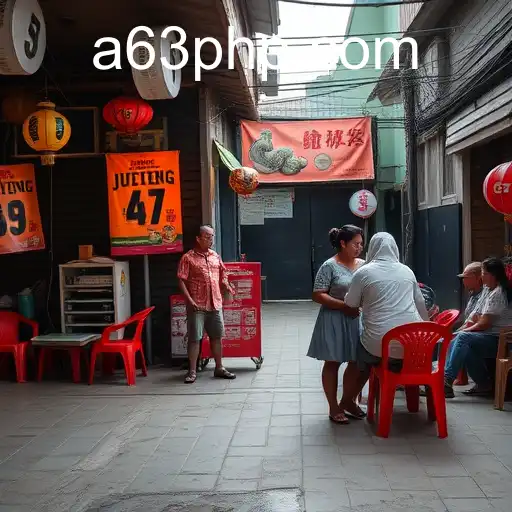
Understanding Jueteng: A Deep Dive into the Controversial Numbers Game
In the vibrant tapestry of Filipino culture and society, few topics evoke as much interest and controversy as Jueteng. This seemingly innocuous numbers game plays a significant role in the socio-economic landscape of the Philippines, weaving through its history, politics, and everyday life. To comprehend its allure, we must delve into its mechanics, the socio-political issues it reveals, and its ever-evolving nature.
The History and Mechanics of Jueteng
Jueteng traces its roots back to the Spanish colonial period in the Philippines. Originally a local form of lottery, it has transformed over the decades into an informal yet pervasive numbers game. The name 'Jueteng' is believed to have originated from the Chinese words 'jué' meaning flower and 'tīng' meaning flower vase, indicative of its Chinese roots.
At its core, Jueteng operates as a simple bet on numbers. It involves a two-number combination drawn from a pool of numbers ranging from 1 to 37. Players choose their lucky numbers, placing bets that can start from as low as 1 Peso, all the way up to thousands, depending on their willingness to gamble. The winning combination is determined by a manual drawing method that varies across regions.
What makes Jueteng particularly intriguing is its adaptability. Bets are typically accepted by 'kubradores,' or bet collectors, who roam neighborhoods collecting small stakes in cash, in contrast to the more formalized structure of government-sanctioned lotteries. This grassroots-level operation has enabled Jueteng to thrive, particularly in rural areas and urban slums, where traditional banking and lottery systems are less accessible.
The Socio-Economic Impact of Jueteng
PH987The prevalence of Jueteng is fundamentally rooted in the socio-economic conditions faced by many Filipinos. With high levels of poverty and a significant portion of the population living below the poverty line, the prospect of winning a significant sum from a small wager is tantalizing. The allure of quick riches, albeit unlikely, offers a form of financial escapism.a45
Jueteng also creates an underground economy that provides thousands of jobs as bet collectors, finance coordinators, and even in administration. However, these jobs lack formal protection or regulation, offering little in terms of job security.
Political Ties and Corruption
Jueteng is not just a social issue; it is tightly intertwined with politics and governance in the Philippines. This game has featured prominently in several corruption scandals involving public officials and law enforcement. Allegations often surface about Jueteng lords paying 'protection money' to local government officials and members of law enforcement to turn a blind eye to their operations.
One of the most notable controversies was the 2000 Jueteng scandal implicating high-ranking officials and subsequently influencing political landscapes. The lucrative nature of Jueteng, with its estimated billions of pesos turning over yearly, continues to tempt many in positions of power.
Legislation and Enforcement
Efforts to eradicate Jueteng have been met with varying degrees of success. Official lotteries, such as the Philippine Charity Sweepstakes Office (PCSO), were established to channel the gambling spirit into government-sanctioned and revenue-generating activities. Yet, Jueteng persists, flourishing under the radar despite legal and police interventions.
In recent years, there have been discussions about legalizing Jueteng to potentially tax and regulate its operations. Such initiatives could redirect proceeds to public services, yet they also face significant opposition due to moral and ethical concerns about gambling.63PHP
The Future of Jueteng
a45The evolution of Jueteng in the digital age presents both challenges and opportunities. With the rise of mobile technology, there are indications that Jueteng operations are adapting, employing digital means for betting processes and networks. This adaptation highlights a significant shift in the game’s dynamics, making regulatory and law enforcement efforts more complex.
Despite its contentious nature, Jueteng continues to endure, embedded in the socio-economic fabric of the Philippines. Its story is a microcosm of broader issues, ranging from poverty and economic disparity to political corruption and cultural attitudes towards gambling.PH19
As the country progresses, the narrative around Jueteng may change. Whether it remains an underground pastime or transitions into a regulated industry is yet to be seen, but it will undoubtedly remain a subject of intrigue and debate within Filipino society.
Explore more about socioeconomic factors affecting the Philippines here.